The Marvel Cinematic Universe was once a one-stop shop for entertainment, shattering box office records and defining an entire generation of movie culture. However, it wasn’t until Disney established its subscription service that the phase-spanning storylines were spread too thin. Before long, there was an overabundance of productions to keep track of, all varying in levels of quality. For every Spider-Man or Hawkeye, there were The Marvels and Secret Invasion. Feige and Disney lost control of their most profitable brand and turned it into an object of ridicule–now embodied by “superhero fatigue.” However, in recent years, the conglomerate has identified its output’s shortcomings and has streamlined it for better control over storytelling, trying its hardest to make up for its mistakes.
Thunderbolts* feels like the first Marvel production fully implemented since that course correction. It reminds you of the heights in popularity the brand once had, and the enthralling stories that came with it. However, audience expectations have waned in the last five years. Streaming services have increased hesitancy to see films in theaters, especially considering how those movies will eventually become accessible at home. There is now a need for movies to be worth seeing in theaters, with many subpar films, even those from pre-existing intellectual properties, failing to garner the same success they would have a decade ago. So Thunderbolts* had to come out swinging, resulting in the realignment the MCU has needed to keep itself afloat.
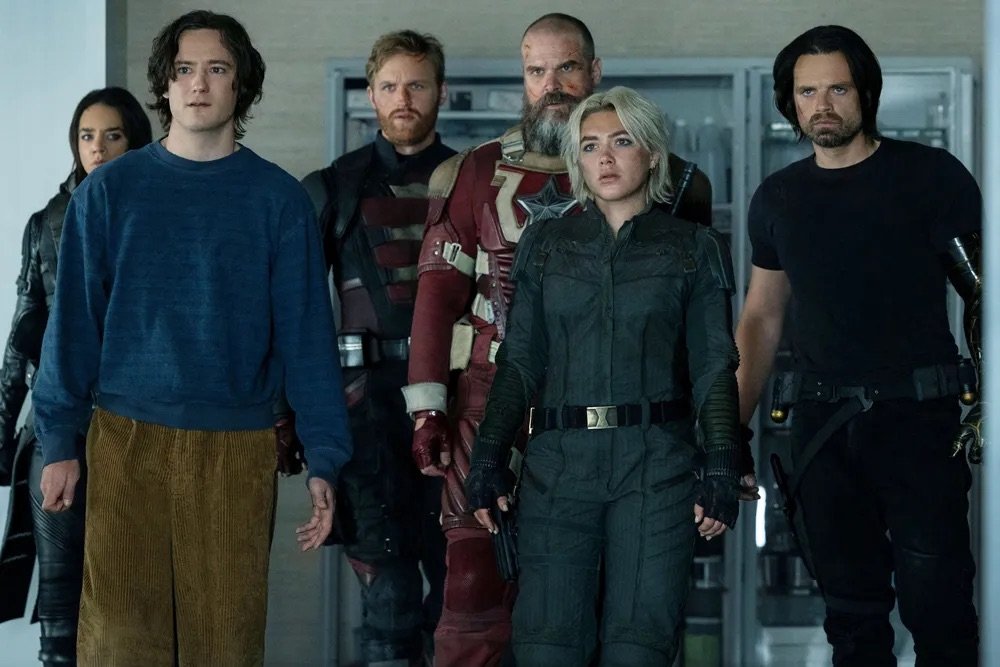
Luckily for Feige and Disney, Thunderbolts* features a well-rounded team of actors, directors, and writers to get the MCU hype train back up and running. Director Jake Schreier and co-writer Joanna Calo, hot off their success with the TV series, Beef, and Calo’s credentials as The Bear’s co-writer and co-showrunner, brought a much-needed gravitas to the film. Their expertise in making dramatic, character-focused narratives was exactly what the story and its cast needed to underline each character’s baggage they brought to the table. Florence Pugh, Sebastian Stan, David Harbour, Wyatt Russell, Hannah John-Kamen, Julia Louis-Dreyfus, and Geraldine Viswanathan all understand their assignment and form one of the MCU’s best assembled ensembles. Their on-screen presence is immaculate, giving each of their roles the right levels of emotion to engage audiences in a fashion few other Marvel movies could manage. Pugh, Russell, and Viswanathan are the standouts, with Pugh and Russell putting together some show-stopping performances, delivering on their past appearances’ promises, and Viswanathan establishing a new name in the MCU with confidence and exuberance. Simply put: the movie knows exactly what it’s trying to do, and has plenty of chaotic and witty humor to keep the ball rolling outside its action and character drama.
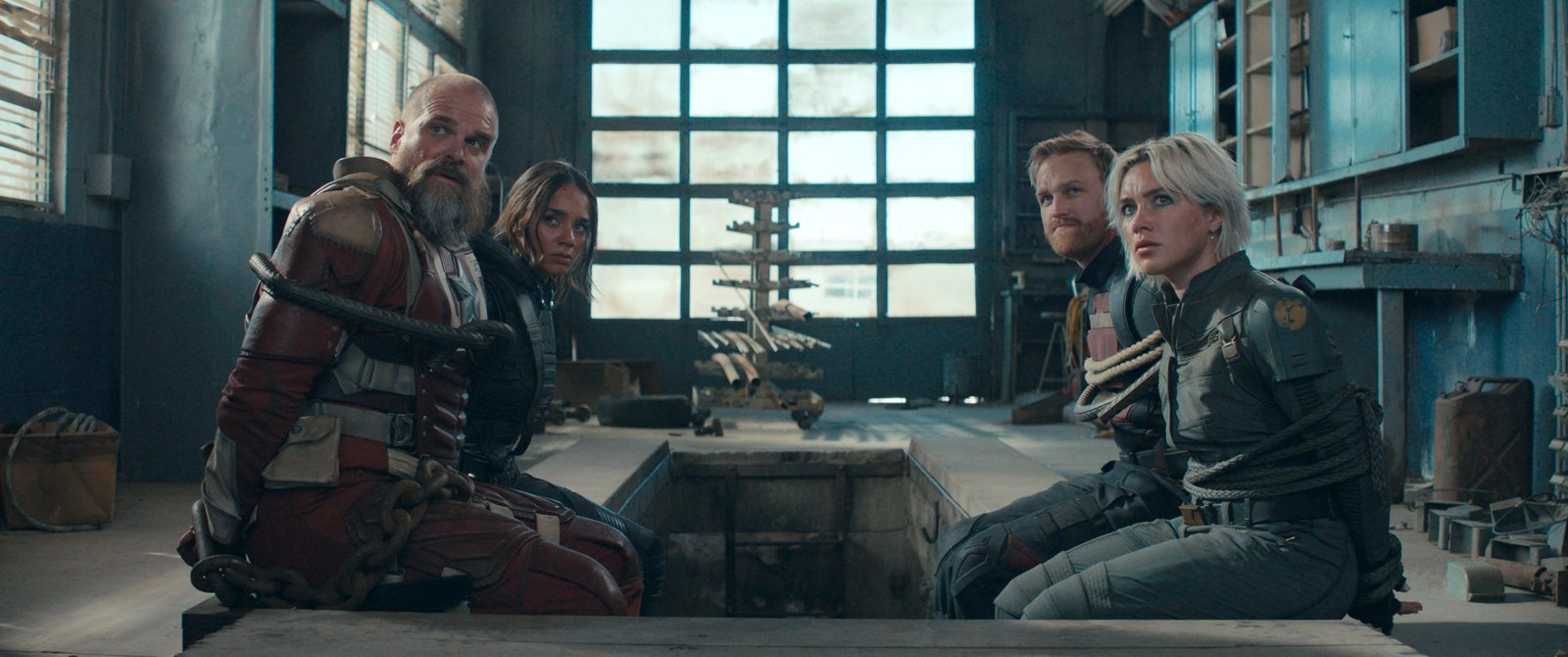
One of the film’s big sticking points is each character battling their past and learning to put it behind them, freeing themselves from the shame and regret they have faced. Yelena has had to tackle her sister’s death without finding purpose post Black Widow and The Blip. Walker has been dethroned as Captain America after his (symbolic) actions abroad that killed a civilian. Alexei has continued to be absent from Yelena’s life despite her sister’s death and being blipped. All three face past events they wish had gone differently, often suppressing those thoughts instead of releasing them to free themselves from pain. This is where Bucky comes in. He knows what these people have been through. He knows how hard it can be to escape the dark reaches of one’s mind. However, it wasn’t until someone helped him return to his former self and helped him redeem his faults that he truly thrived as an individual. The baggage each character brings is much too great for them to carry, so having them learn what it means not to be alone and to support one another despite everything they have done is pivotal to how each of their arcs plays out.
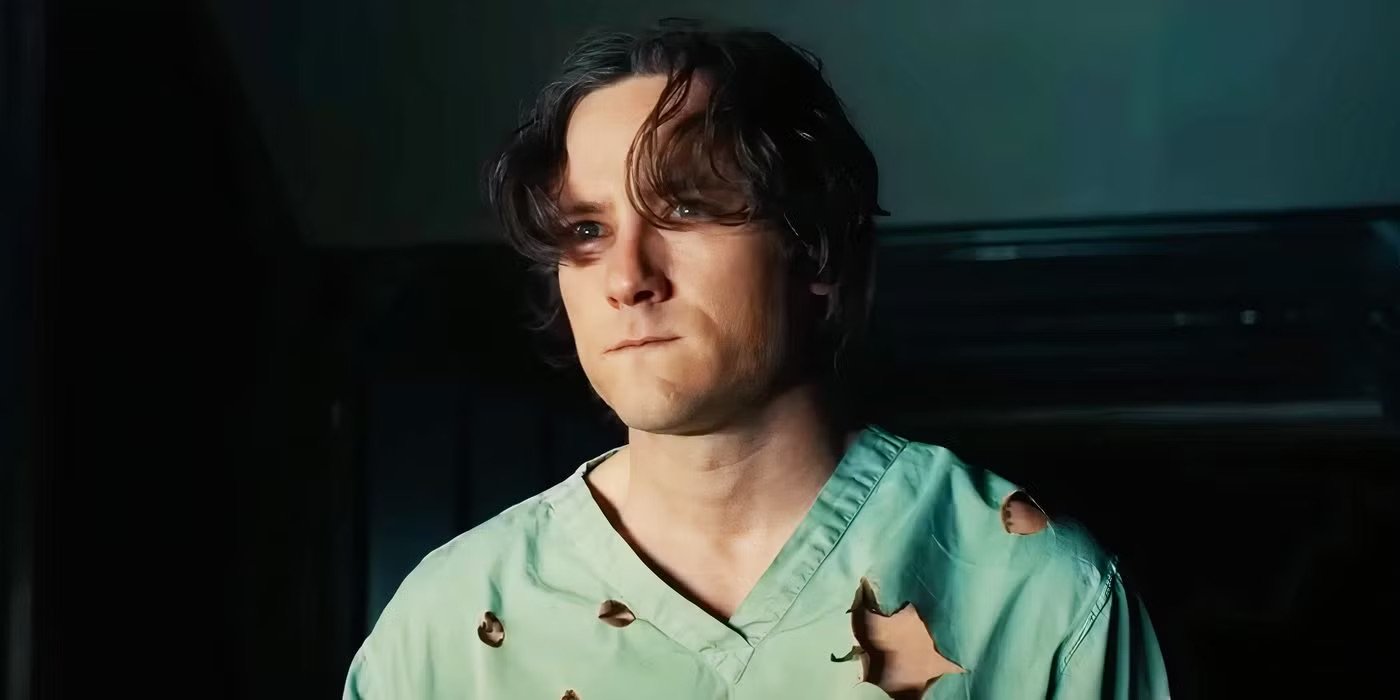
Bob’s arc is no different. His past is nothing short of gruesome, pushing him into addiction and mental episodes to cope with his trauma. It isn’t until he meets Yelena and the rest of the Thunderbolts that he grapples with his grief and moves forward as an individual. Thus, the movie’s emotional climax becomes a tearjerker, helping audiences understand and resonate with Bob’s struggles and understand what it’s like to feel alone with your thoughts. He and the Thunderbolts all learn how to accept their flaws and know there is someone out there who is there for them, even in the darkest of times. It’s surprising to see such a bleak yet powerful message in a Marvel movie, but it stands as one of the strongest and most heartfelt interpretations of mental health in modern cinema, let alone in a blockbuster.
That said, the film occasionally errs too far into TV-level pacing and refrains from providing context to some narrative beats. While Bob, Walker, Yelena, and Alexei all have their heartfelt moments, Ava and Bucky don’t get the same treatment. Granted, both characters’ backstories have been provided in previous films, and Bucky has been the driving force behind at least a few MCU stories by this point. But their omission feels rather arbitrary and made for the sake of time or pacing, despite the film’s pacing feeling more drawn out than it needs to be. The film also dedicates so much time advocating its core themes that it leaves room for better context to loose threads set by previous movies or TV shows. De Fontaine is the sole connection to those productions, which make for a good Thunderbolts movie but undermine the other bits of world-building established up to this point in the MCU.
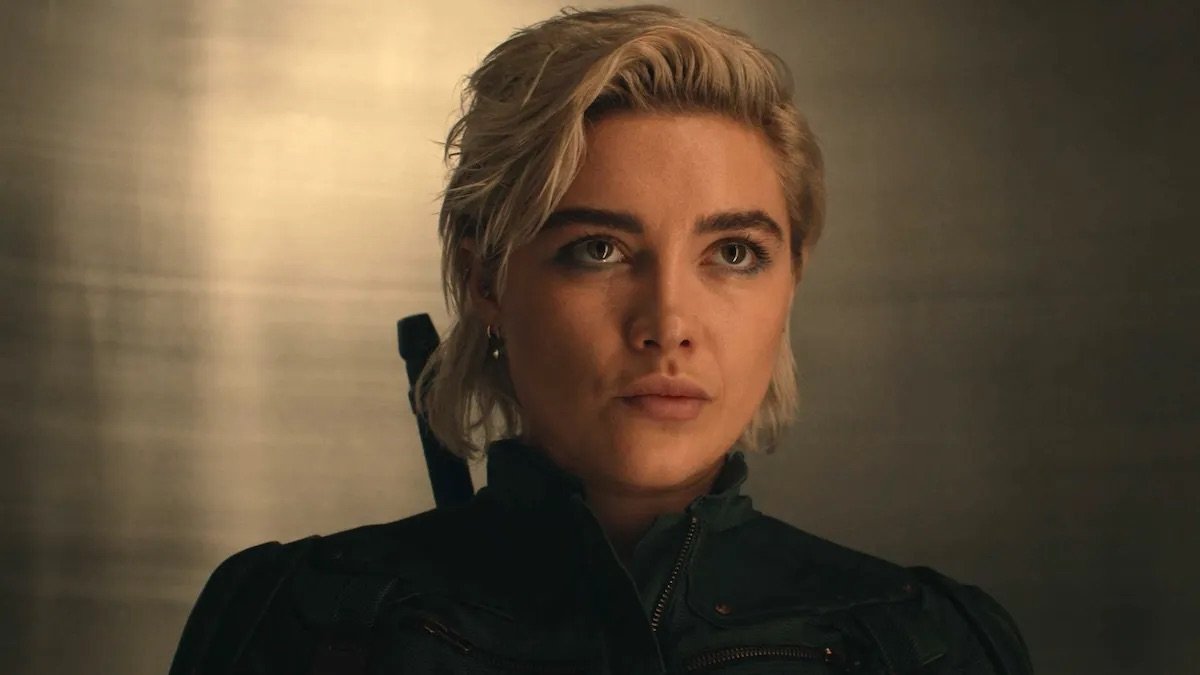
Thunderbolts* is a capital M Marvel movie. While that quality occasionally comes with a tried-and-true formula that wanes in novelty over time, the film’s approach to its drama and action set pieces more than makes up for its shortcomings as an MCU film made by a solid TV writer and director. Like its subtextual themes, the cast is fantastic, and ties up some characters’ arcs into a nice little bow before the next phase of the MCU crashes onto our doorstep. The film expects you to have at least some prior knowledge of the characters and their past actions to become associated with Valentina Allegra de Fontaine. But that storyline has been the best and most consistent across the last four years of the MCU, and marks a successful return to form for a brand in desperate need of a refresh. Mark your calendars, movie-goers. The Marvel Cinematic Universe is back.
© Creative Insight 2024