Before even jumping into the Christian Bale classic, American Psycho, the behind-the-scenes make for an enthralling story. Bale and director Mary Harron were dead set on making the thing, going as far as continuing to prep for the project after it found funding in a deal that excluded them from it. Bale and Harron met eye-to-eye about the film’s premise: a capitalist satire about an alien who lives amongst those from Wall Street. It is what Harron has recently clarified, putting into perspective the conflict Bale and Harron portray when all is said and done.
WARNING: This review/retrospective contains some spoilers. Reader discretion is advised.
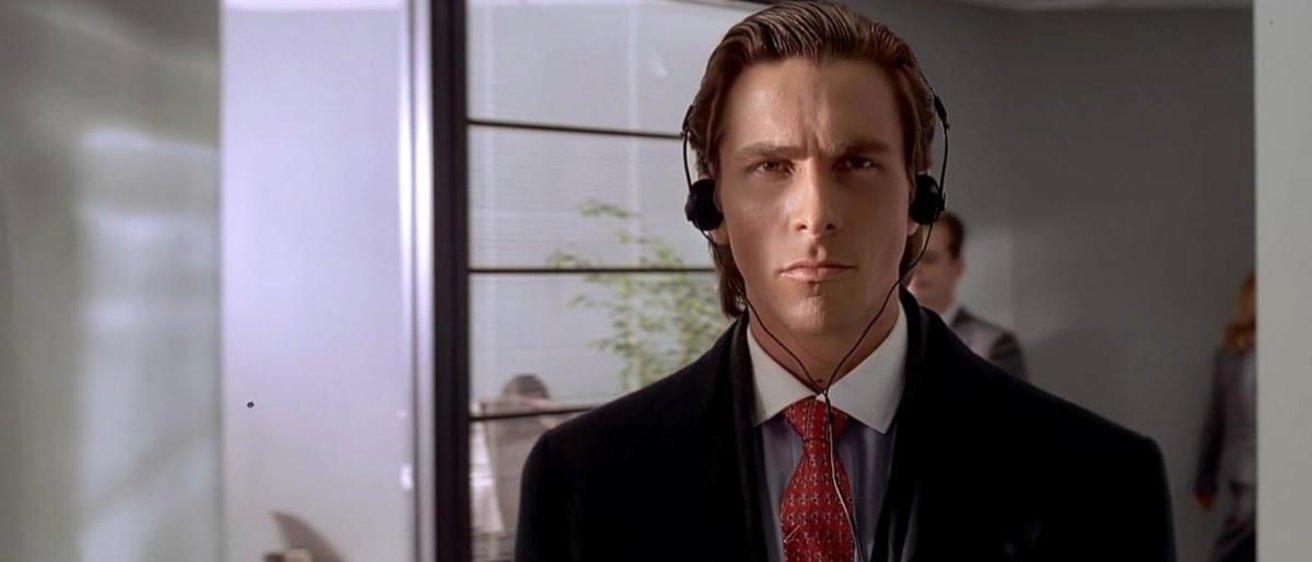
What jumps out almost immediately about the film is its impeccable performances. The Wall Street bros are brash and egotistical, and each actor immediately understands what role they play in portraying such two-dimensional individuals. Willem Dafoe’s performance as Detective Kimball masterfully catches onto Bateman’s antics throughout the film without ever growing explicitly suspicious about his behavior. But Christian Bale is why this film has become so iconic. His delivery of a compulsive egotist slowly losing himself through alienation and a lack of care from those around, especially when paired with such a cynical yet calculated attitude, makes Bateman much more tragic than he is arguably intended to be. To see a man lose his sanity over his peers and the state of society and believe that murder is the only way to rid the world of its shortcomings, whilst making jokes about people like Ed Gein and Ted Bundy, shows the audience more about the world Bateman lives in than the man himself.
No two scenes complement this than the murder of Paul Allen and his argument with his lawyer. When he murders Paul, he gets him drunk before distracting him with his vast knowledge about 80s pop music to bludgeon him with a fresh, shiny axe. Here, Bateman is calculated in his moves to kill Paul, but showcases his detailed and perfectionistic personality through what he uses to kill them. With his lawyer, he has a different attitude. Bateman has confessed to him about his crimes, but he does not believe him. Regardless of whether his lawyer saw Paul in London, how could someone like Bateman murder so many people? “Why isn’t it possible…why not, you stupid bastard?” Bateman knows what he has done, but nobody believes him. So, who is telling the truth: Bateman or his lawyer? Neither Bateman nor the audience could know, because the protagonist’s headspace is mired by hysteria and psychopathy and has little chance of recovering what has been lost to him and the audience.
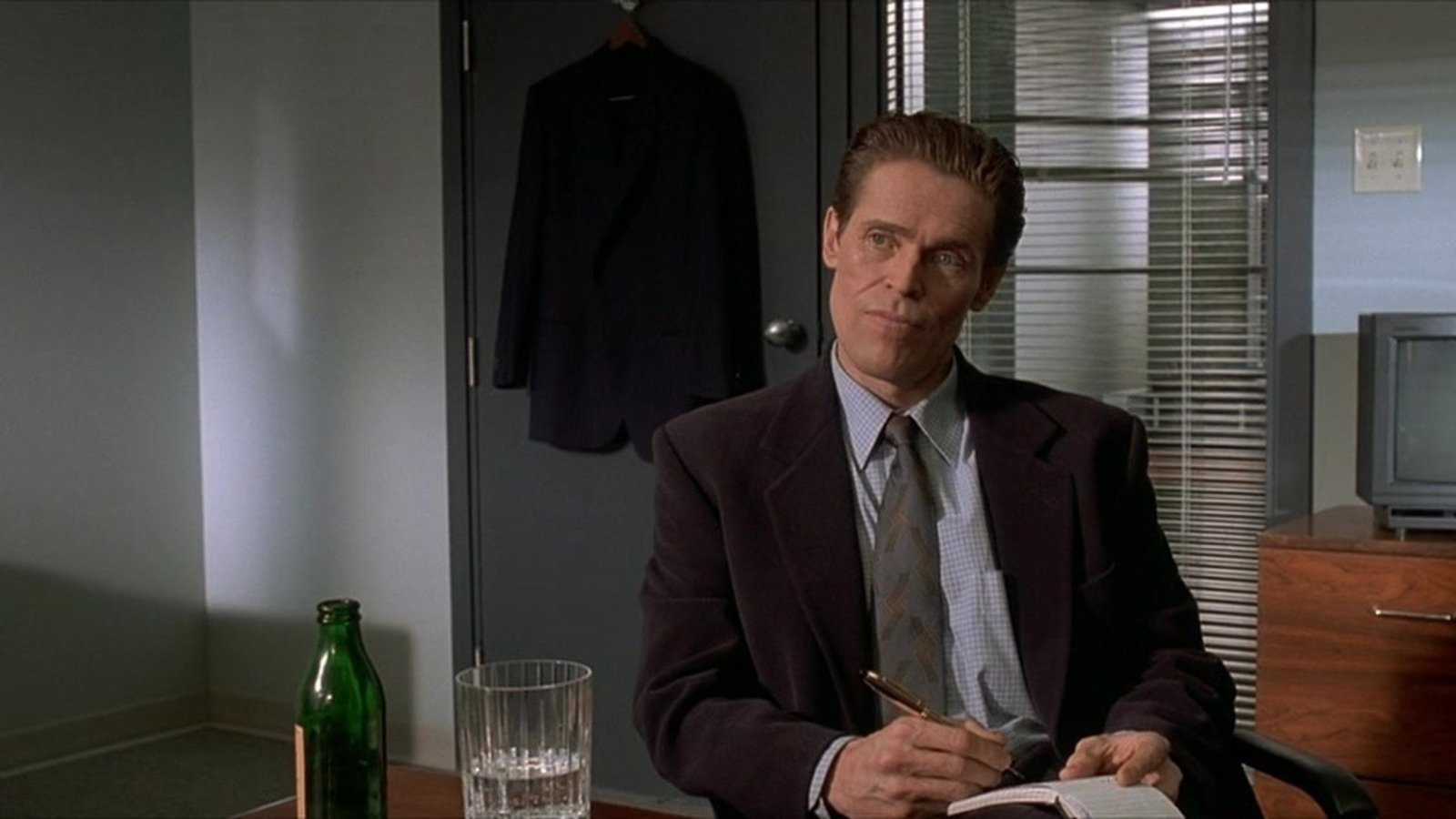
However, there are times throughout the film where Bateman has enough innocence left in him to second-guess himself or admit to his crimes. His meltdown confession to his lawyer is his sanity at its breaking point, but also acknowledges that he has gone down the wrong path, and uses what little sanity he has left to escape the overwhelming misery his murder spree has brought him. While Patrick Bateman may only care about himself, he cares about his body and sanity. He starts his day with an exquisite skincare and shower routine, followed by intensive exercise. He greets his associates with respect and at least makes it look like he is a man who is calm, cool, and collected under pressure. If not for his fall from grace after putting on such an admirable facade in front of people who are so devilishly egotistical, he might wind up living a fulfilling life.
One of my favorite scenes from the film is when Bateman lures his company’s assistant, Jean, to his apartment so he can kill her. But he frequently deviates from how he wants to kill her. He picks up a roll of tape from his kitchen closet before putting it back once she notices it, only to pick it up again when she does not. Throughout the film, Jean and Detective Kimball are onto him. They know he is hiding something, but Bateman also realizes there are respectable qualities to them, ones that make him question himself. Jean is unsure about what her future holds, and leaves a good enough “not like other girls” impression on Bateman, where he lets her leave the apartment without getting killed. He cannot even get himself to use an axe or knife, instead picking up a nail gun to try and shoot one at the back of Jean’s head. He may never look at his victims in the eye when committing their murders, but each one he commits throughout the film requires him to get his hands dirty. The only other time he cheats his way out of murder is during a shooting spree, which embodies his panic and franticness as he falls further from sanity.
There is a semblance of respect from Bateman towards Jean and Detective Kimball because they are not people whom Bateman is disgusted by. He recognizes that they have not done anything wrong and are good people, thus letting them escape and bear witness to his diminishing sanity. To Bateman, the world is plagued by homelessness, world hunger, and nuclear warfare. So, how could he kill those not attributed to any of them? Bateman is a blood-hungry psychopath, but he does so with the initial perception that he is on a righteous path. He believes his murders are curing the world from its deviance, but his actions further disconnect him from a world he already feels disconnected from.
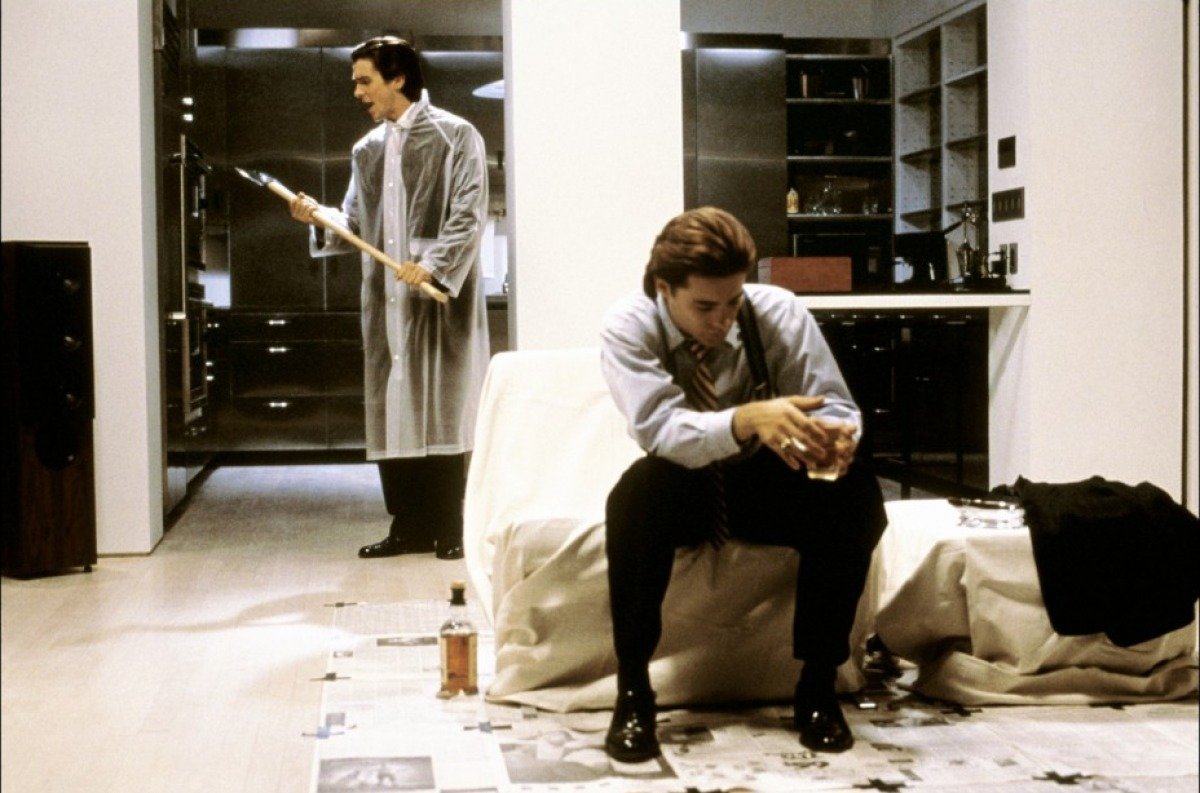
American Psycho is a fascinating movie. At first, it is an incredibly cynical and satirical premise that conceals Bateman’s fall from grace and the sanity everyone perceives him to have. It sometimes feels too outrageous and makes people question what’s going on or what the film is trying to say. Then the second half arrives and puts everything Bateman has done, and everything the audience has witnessed, into context. Those cynical moments are one of many ways the film shows Bateman’s own cynicism and how he at first disregards how crazy he is and how wrongful his actions have become. The film's most iconic moments are when it is at its most entertaining, yes, but it will always be more enthralling when placed into the film’s context. Bateman is not a Wall Street bro. He is mocking them. Murder is not cynical or funny. It is tragic and distressing. Bateman is a psychopath, but he is not a cold-blooded killer. Despite how twisted his mind is, he has a general principle guiding him throughout his murders.
It is hard to say that Bateman would be a good person if he were not a psychopath. He acts like a good person because he is a psychopath. But the former almost perfectly encapsulates the film’s duality in tone and messaging, and how audiences continue to perceive it all these years later.
© Creative Insight 2024