Formula One is one of the world’s biggest and most prestigious racing series, with millions of fans around the globe tuning in each Sunday to watch the world’s fastest cars and drivers on tracks that leave little room for error. The formula thrives on success, but has not achieved the sort in the United States compared to other sports. Being something that has been around since 1950, garnering as little US viewership as it does compared to others, is legitimate cause for concern. Following the 2018 purchase of the broadcasting rights by American-based Liberty Media, they sought to make the pinnacle of motor racing bigger and more popular than ever. First, they allowed Netflix to document the season-long triumphs and struggles of each team on the grid, heavily boosting their average race viewership. Then, they let Apple Studios, Joseph Kosinski, and Jerry Bruckheimer produce F1: The Movie, collaborating with the sport’s teams, drivers, and organizers as a wide-ranging advertisement for Formula One as a sport and a brand. While they may have succeeded commercially with such a prestigious, immersive, and star-studded product, the wiring keeping this film together is stitched together more haphazardly than the true heart of its story had going for it.
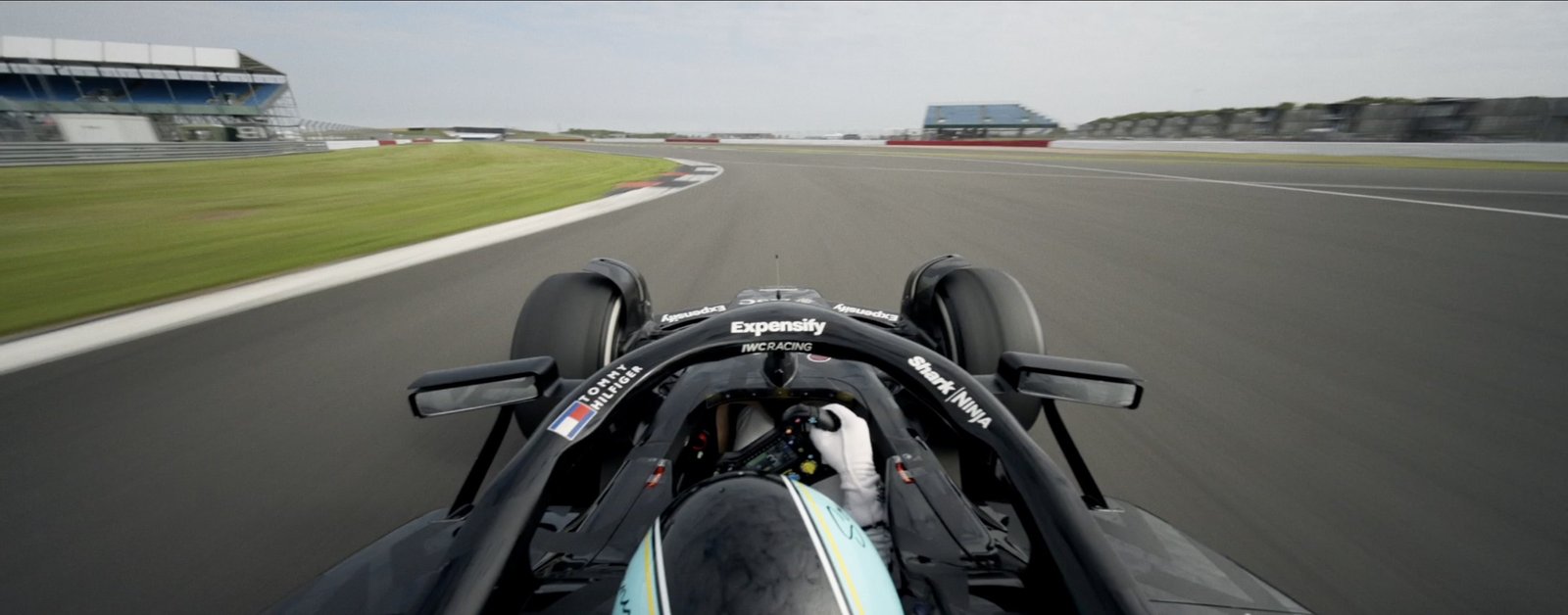
F1: The Movie screams summer blockbuster, and rightfully so. They consulted real Formula One veterans, most notably Lewis Hamilton, to make racing sequences feel realistic. The film shows how even the smallest details can make the sport worth watching, including teams determining tire strategies before and during a race weekend to accommodate changing weather and race conditions. Its camerawork also makes it one of the most immersive racing experiences ever produced, taking from racing movies of years past and putting audiences in the driver’s seat to get a real sense of what it takes to push the world’s most advanced cars to the limit. The movie induces immersion aside from the racing itself, with unprecedented access to the Formula 1 paddock allowing APX GP to feel like a real racing team you would see in today’s sport. The film also provides Formula One’s current stars, teams, commentators, and journalists a moment in the spotlight, signaling to newcomers who they are before even watching a real Formula One race.
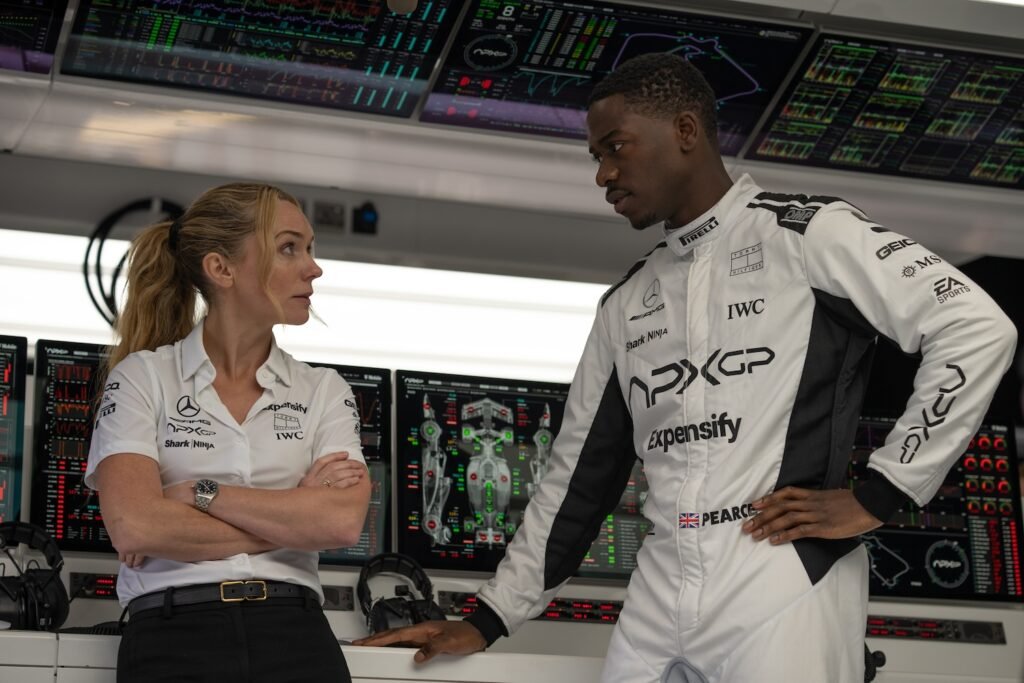
Plus, with the likes of Brad Pitt, Javier Bardem, Kerry Condon, and Damson Idris working alongside Joseph Kosinski, the film backs up its visual might with casting that brilliantly captures the audience’s attention. Pitt, Idris, and Condon each convey how older-age, voice-with-no-face, and under-the-radar actors can have such dominant screen presence when the focus is never solely on their characters. Idris’s Sonny Pearce is as quick as he is arrogant, but learns to step away from public relations and focus on being the racing driver everyone knows he can be. Condon’s Kate McKenna is a female technical director driven to prove her worth in a sport led entirely by men in well-tailored suits and team polos.
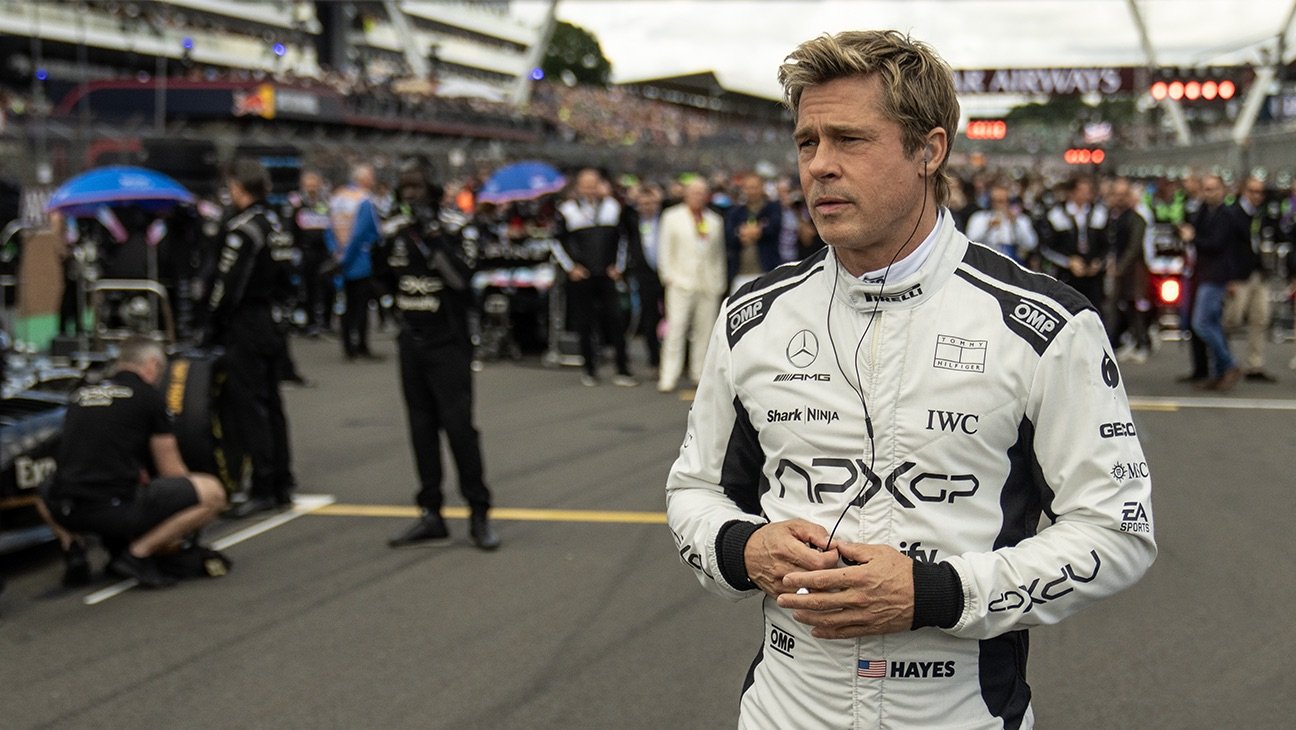
But the most notable performance is Pitt’s Sonny Hayes, a racer who missed his big shot early in his career but is given a second chance at racing glory. It is made clear how much Sonny has struggled to regain his full potential at the start of the film, but he, APXGP, and the audience learn to love him for who he is and what he can still do behind the wheel. Like all racing drivers, Sonny is motivated by his love for the sport and the pursuit of “the zone”–the point where time slows, your field of view expands, and driving the car on the limit comes naturally. All three protagonists have a point to prove to their competitors and teammates, but it comes with a caveat: there are simply too many other narrative clichés fighting for the spotlight.
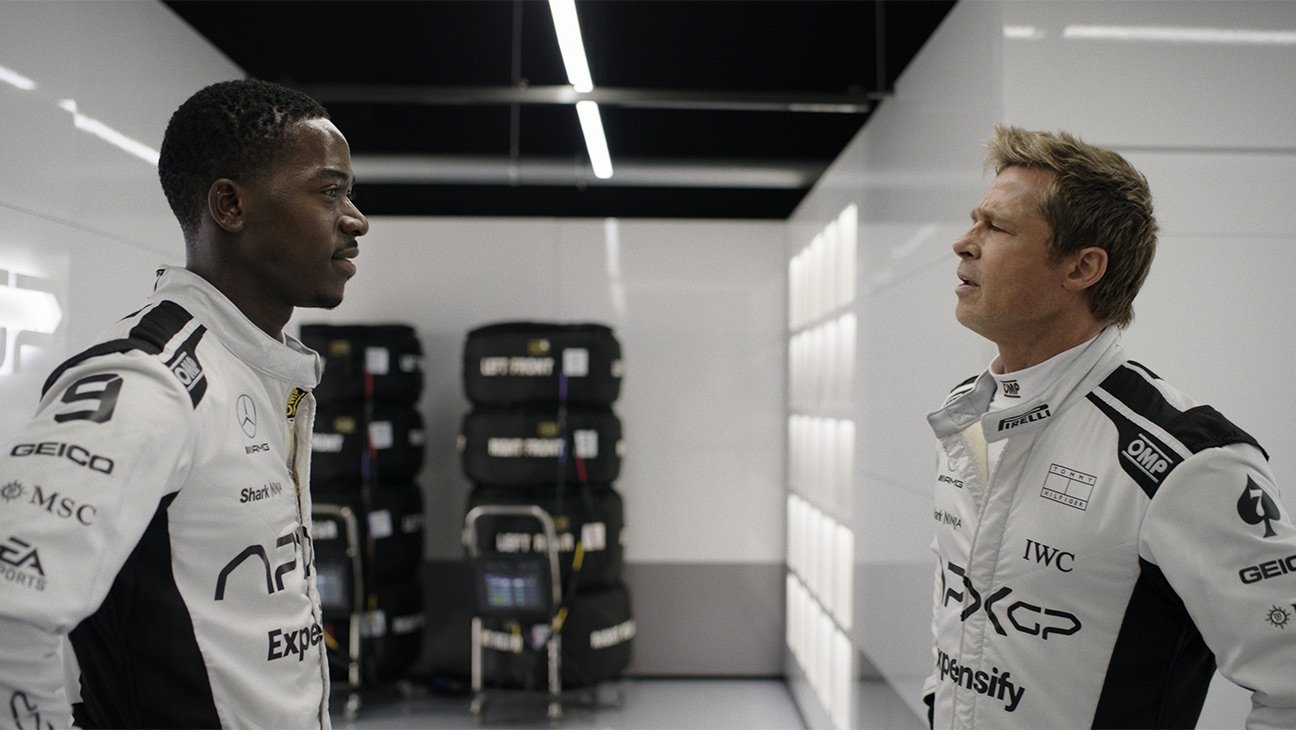
About two-thirds through the film, Sonny teaches Joshua to block out the “noise”–the press and publicity–and focus on racing, and you can say the same thing about this movie. Sonny is a lone wolf and a nomad. Joshua is an arrogant youngster who takes out his anger on others. Kate is a strong and independent woman who has a love affair with the lead protagonist. Bardem’s Ruben Cervantes is a nervous team principal who gives Sonny a second chance. They all work on paper, but not when their archetypes detract from what the film is trying to say about Formula One. This coincides with the film losing its touch on what makes Formula One so interesting in exchange for a more dramatic and entertaining narrative. The last thing fans would want is for a film to do a disservice to the very material it portrays or pays homage to, which it does on multiple occasions in the latter half of its runtime.
Its moment-to-moment details also never feel quite as connected or concise as necessary, making the film’s middle portion feel out of place compared to what came before or after it. It highlights the teams and drivers who make up the sport, but also frames the protagonists discreetly enough that it deems it necessary to shift towards internal turmoil. It details the strategic elements that go into a race, but then focuses on over-the-top crashes, race manipulation, and team sabotage. It winds up feeling like an action spectacle more than a racing movie–one about racing, for that matter–despite its character drama being what keeps people watching APX GP mold into a team worthy of victory. Thus, the writing chops are not on pace with the rest of the film, which is disappointing considering how everything else accomplishes what it set out to do as a movie representing the best of Formula One.
F1: The Movie feels more like an amalgamation of what makes other racing movies (and Top Gun: Maverick) so successful, which makes it lose some of the identity it had gained in the first third of its runtime. The film has everything it needs to be a blockbuster spectacle, but never enough to proudly stand alongside its spiritual predecessors. Believe it or not, what it tries to do has been done before–technical innovations, unprecedented access to the sport, a star-studded cast and director behind the wheel, and all. That movie was Grand Prix, which released sixty years ago. It thinks it is a fresh and captivating take on racing. It believes the footprint it laid for itself narratively bears novelty and intrigue, but is only driving along the same path other racing movies have gone down before, albeit with a much nicer coat of paint.
This movie has its place in pop culture and within the racing world. If it hadn’t relied so heavily on visuals and star power to make its story compelling, perhaps the narrative could have been more developed and complete. It needed more time in the wind tunnel to be the definitive racing spectacle it and the sport set out to be, and to embody the high speeds and close wheel-to-wheel racing die-hards love so much about cars and motorsports.
Photo credits: Jerry Bruckheimer Films, Apple Studios, Warner Bros.
© Creative Insight 2024