With its initial success among critics and general audiences, Parasite officially broke the Western mold by winning Best Picture at the 2020 Oscars. Bong Joon-ho took a story of classism and how it polarizes modern society, making it one of the most finely crafted works of fiction in modern cinema. However, his success came after several other films that approached a similar subject in different contexts. Snowpiercer is about social class and what it means to survive, but it also takes place in a post-apocalyptic world where the remaining survivors are trapped inside a train. The Host is about political chicanery and how it affects those dealing with the aftermath, but it also has a mutated ocean creature as its antagonist.
With Parasite, Bong Joon-ho took everything he built his career from and implemented it into a more contemporary context. Everything, from the camera direction to the writing and editing, works effortlessly to create an experience worth watching over and over again. Sadly, for Bong, the film’s structural integrity, particularly related to its lasting message, became something the world tackled head-on in the months and years following its release, and causes its very charm and thematic gold to become rather redundant in present-day context.

What Bong Joon-ho gets right almost immediately is how to hook people into the film’s characters and what they are after. The Kim family is down on their luck, just scraping by with the money left to keep a roof over their heads. Each family member has admirable qualities: the father is calm and reassuring, the mother is respectable, the daughter is artistically talented, and the son is genuine and kind-hearted. However, once a tutoring opportunity presents itself to the son, Ki-woo, the Kim family shows their sly and manipulative tendencies. They would do anything for prosperity, and Ki-woo’s big break opens the floodgates for the rest of his family to infiltrate the well-off family he soon tutors for. What follows is nothing short of thrilling, as the family’s fraudulent schemes come to a head just when they think their plan has worked, with a series of twists that few would see coming. Ultimately, the Kim family is no better than the household they infiltrated, and take advantage of those who take advantage of the world.
However, one thing Bong gets right is that every character feels real and tangible. His contextualization of social class lets audiences see the impoverished and affluent state their case about why they want to and should live fulfilling lives. The Park family is selfishly well-off but, like the Kim family, is kind-hearted and high-spirited when things go as planned. Granted, they often prefer to protect themselves over who they have hired, but it comes from their awareness of their social status. Like the Kim family, it doesn’t make them good people, but it at least makes them respectable, and that becomes a problem when the audience is supposed to root for one family over the other.

Parasite falls short in how it contextualizes the dealings between the Kim and Park families. The Kim family infiltrates the Park family’s home, like a particularly infectious organism, and complicates their situation by taking advantage of their patronage and naivety. It’s mistaken for the Park family to live such a well-off life when the Kim family and those like them live much further down from them–figuratively and literally. But it’s also wrong for the Kim family to take advantage of Ki-woo’s tutoring opportunity and scurry their way through the Park family’s for-hire services so they can earn a considerable amount of money. Which one is worse is unclear, and the film doesn’t seem to know either. The father, Ki-taek, admits that it's sometimes better not to have a plan and, therefore, not be disappointed when it goes awry, and the family does not get away with their schemes. However, they never learn from what they’ve done. They revert to what they had done before, hoping everything will blow over. They get away with their antics. It leaves the impression that the world’s socioeconomic system is one that both sides give and take from as they please, which makes it unclear how some should feel about the film’s underlying messages.
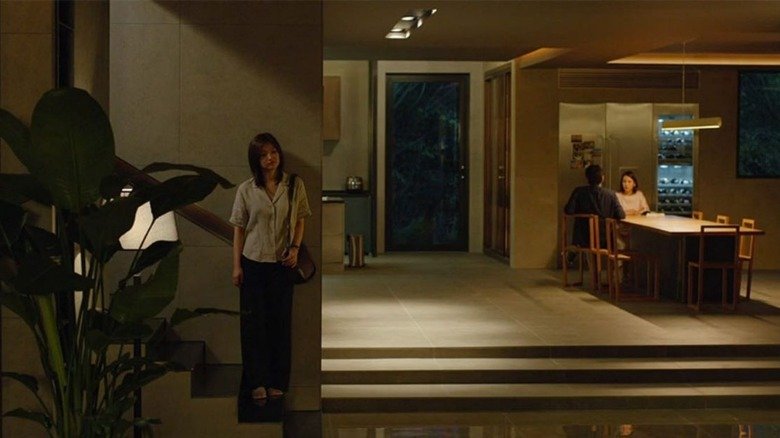
Despite its pitfalls, Bong Joon-ho, alongside editor Yang Jin-mo and cinematographer Hong Kyung-pyo, remains a master at work in what he achieved with Parasite. How he has envisioned the story to play out and how it’s shown to the audience is breathtaking, and his defined vision for his projects–especially from his illustrative storyboards–show a storyteller at his peak. He knows exactly what he wants to say and do and how to implement it, and he leaves behind a film that is a sight to behold in all the right ways. It’s invigorating to see a story as deep and gripping as this get the dedication and craftsmanship it deserves from someone who isn’t afraid to butt some heads along the way. That’s how this film earned Best Picture and unanimous praise from critics. That’s why general audiences love experiencing the picture time and time again.
Bong creates an experience worth crossing a language barrier for because its cultural barrier is understandable and accessible to the masses. Its best implementation lies in the film’s latter half, where the Kim family walks home to their basement flat far away from the Park family’s hillside estate. The longer they walk, the more stairways they walk down, and the more dire their situation feels. Framing their descent down to their flat explains everything the audience needs to know for why the family would infiltrate the Park family’s home. It’s an astonishing image to deliver at a time in the film in need of its context to resurface so it can come crashing down. It may not redeem the Kim family, but it impeccably captures the disparity between the rich and poor in modern society without a word being spoken to illustrate it.
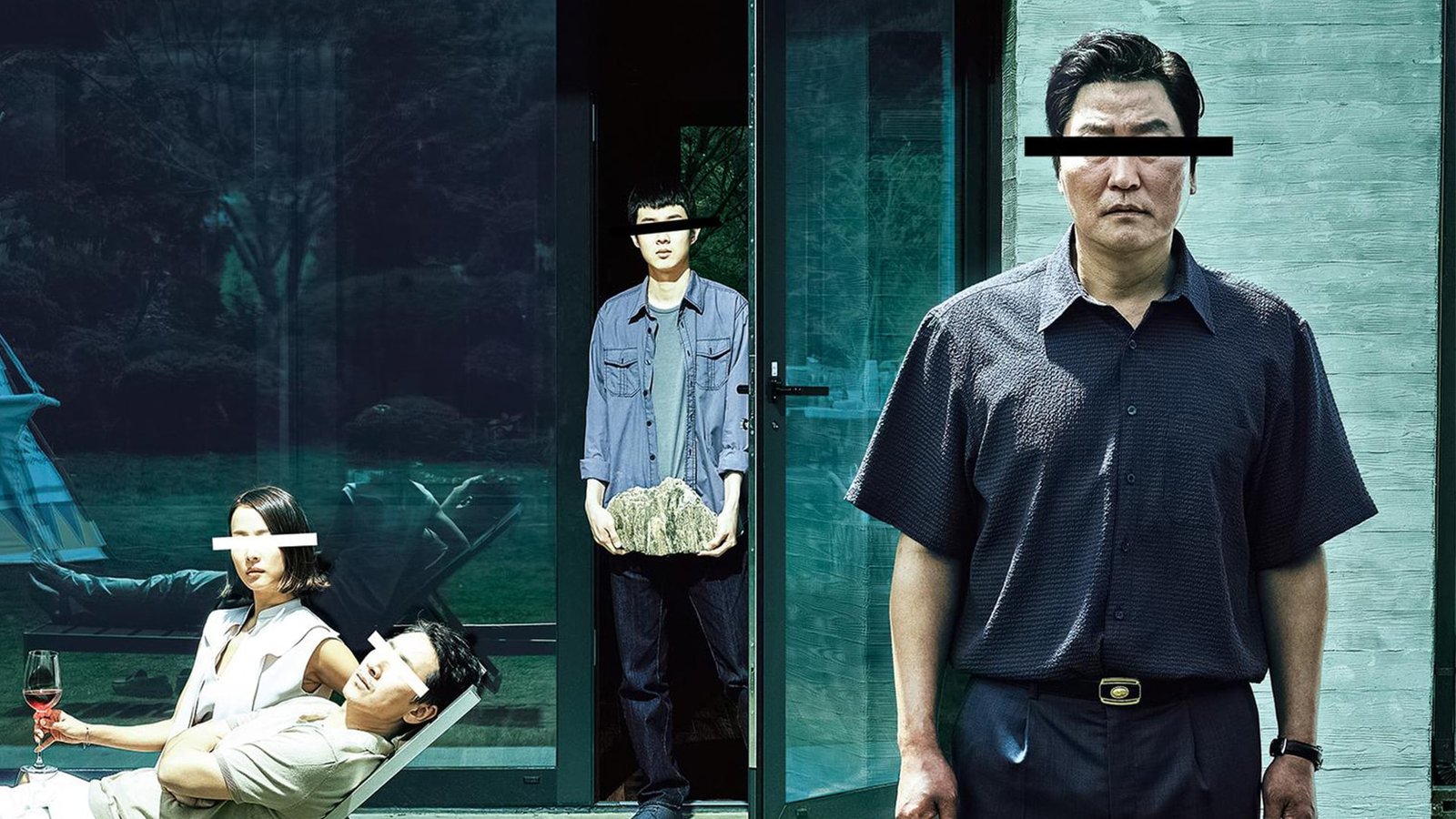
Parasite is a good movie. Bong Joon-ho is a fantastic director. The narrative between the Park and Kim families is thrilling from start to finish. These are attributes often praised amongst audiences, even years after Parasite’s inception. But what lies past that is a two-sided coin. One side is a gripping narrative about the socioeconomic disparities in modern society and what people feel it takes to live a prosperous life. The other is a dialogue between those disparities that feels two-faced, meaning no side of the argument is doing what is best for themselves or each other. To have such a fantastic experience leave little of a positive impact is unfortunate, and perhaps the circumstances which followed the film’s release are a testament to why it lives with such little impact. Since 2019, the world has dealt with mortality and has revealed the same ugly truths that Parasite explores. There isn’t much the film tries to say that hasn’t already been said, but its message is still important for those who need to be reminded about what it’s like for others less fortunate in today’s world. It’s no longer a revolutionary concept, but it remains a provocative one.
That’s what Bong Joon-ho gets right about social class, and his two cents on the subject remain one of the best implementations of it, even if it isn’t as provocative as many tout it to be.
© Creative Insight 2024