The Hollywood of yesteryear is a distant memory in the eyes of modern-day movie-goers. There was once a time when extensively lengthed films included an intermission to give audiences some remission and help them recollect what’s transpired thus far. World premieres and wide releases were foreign concepts, instead relying on the week-by-week rollout in theaters across the country and the world to gain traction and buzz from critics and the average movie-goer.
The industry has changed drastically in the last half-century, and so too, have audiences. We now live in a time where everything vies for people’s attention for as long as possible and asks everyone to pay a pretty penny for the “best” experience possible. However, there has been a recent trend of purposefully debunking modern trends, and instead reverting practices to how stories were communicated all those years and decades ago. Nowhere is this more prevalent than in the film industry, as blockbusters become more redundant and divisive after years of stagnation and domination from franchises and intellectual properties. Now, there is a new wave of films, and filmmakers, trying to reverse their predecessors' approach to the medium and spotlight what made going to the movies so magical in the first place.
Enter: The Brutalist, a three-plus-hour saga using cameras and techniques from classic cinema to tell a story about how the world once was. To many audiences, it’s unconventional. A movie with an intermission? Film grain? Most people nowadays have never seen such practices. Yet not only are those some of the film’s finest qualities, but its narrative about a foreign architect immigrating to a capitalist society that takes advantage of him and his intellect is quite possibly the most relevant of the decade thus far and acts as a direct antithesis to how the industry functions in modern times.
Part of what makes The Brutalist such a sight comes down to its pool of acting talent. Plenty of unknown actors appear throughout the film, showcasing how even the lesser-known talents can steal the show and rival the work of their acting colleagues. And those colleagues are no slouch when it comes to their roles. Felicity Jones dazzles as Erzsébet, a wheelchair-ridden journalist and wife to an incredible architect, never appearing until the film’s second half where her husband’s endeavors in the States take a toll on his life. That is where her character’s impact is felt: as a supportive yet determined driving force behind her husband, László.
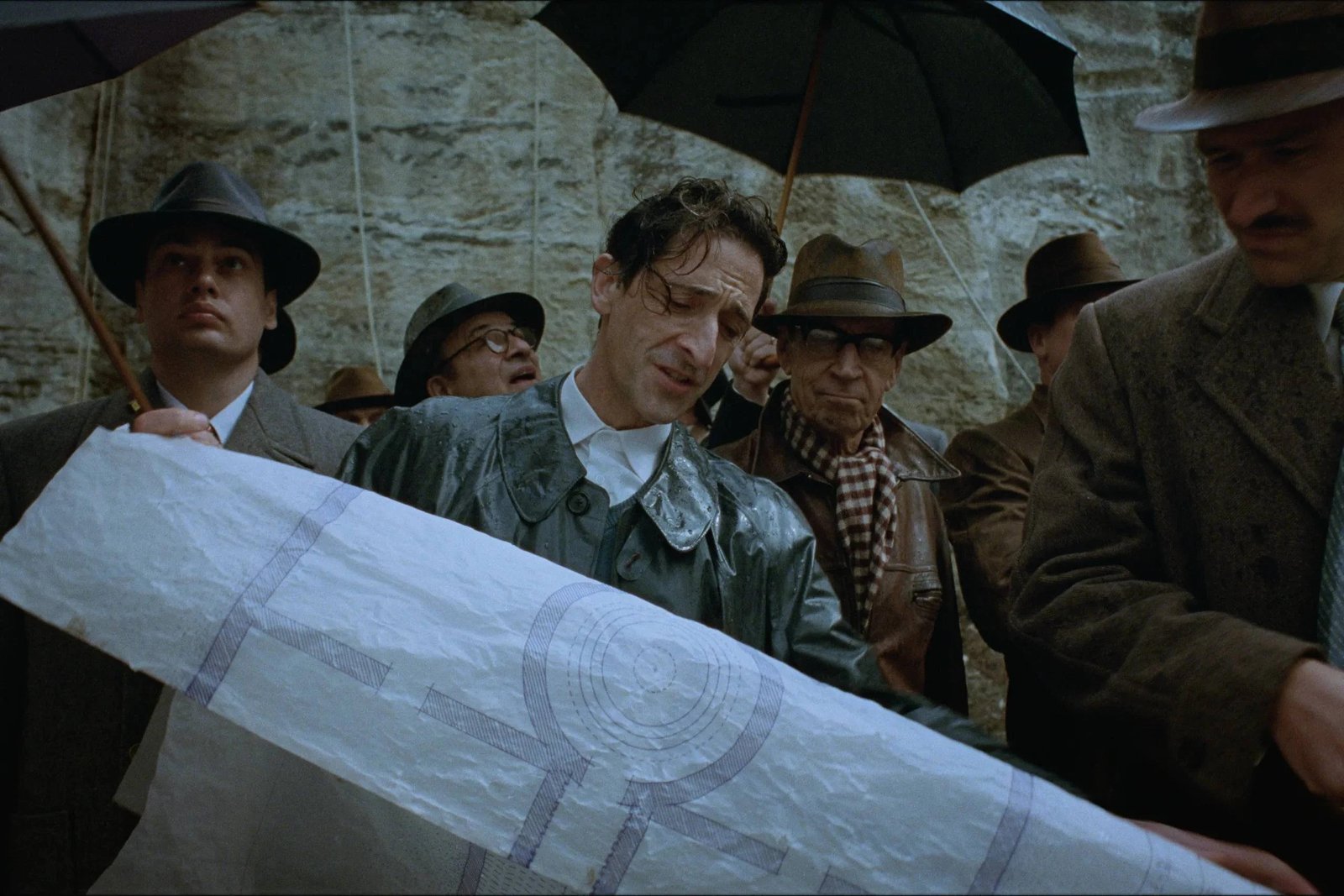
Speaking of which, the lead protagonist, played by Adrien Brody, is an intelligent and intentional brutalist architect, who gives purpose to the curves, edges, and materials his work incorporates. He could be seen more as an artist than an architect, as he intends to leave a message and impact with each installment that will last for centuries. He exhibits an underrepresented breed of modern artists, those who take to a blueprint instead of a canvas to envision their values and aspirations towards society. Despite his profession, he wants his legacy to be felt by those who have right and wronged him, whether it be his wife, the Soviets, or his eventual client, Harrison Lee Van Buren.
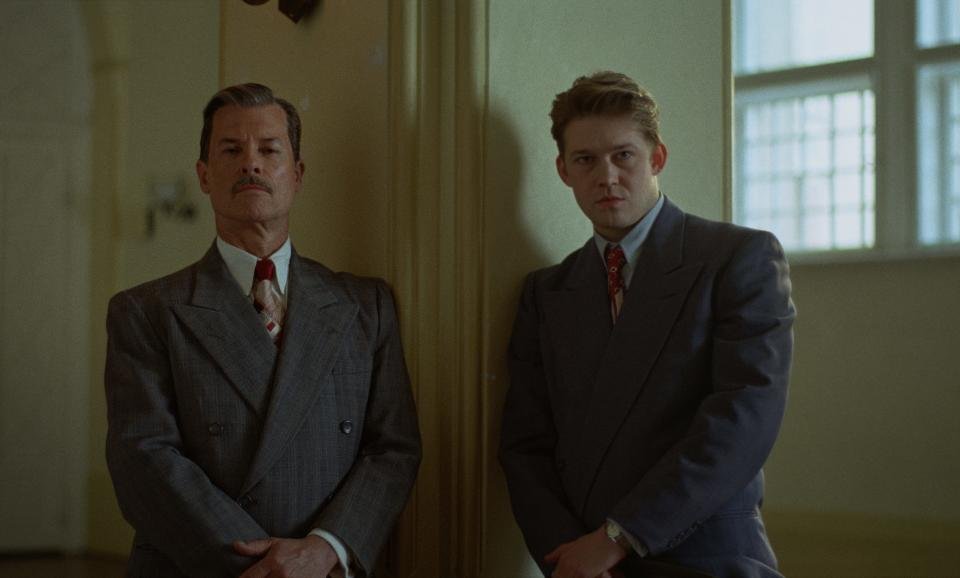
Van Buren, played by the impeccable Guy Pearce, is an incredibly thought-provoking individual. After making a living from his entrepreneurial showmanship, he seeks to give back to his community, eventually enlisting László to help design a space for shared cultural experiences. However, what makes Van Buren so thought-provoking is how he goes about his work with László. The entrepreneur is an incredibly impulsively mannered individual, often having outbursts about situations that take him by surprise. His introduction to László is no different, with Van Buren’s sudden outburst towards him and his work becoming the driving force behind their relationship. Ultimately, Van Buren sees László as nothing more than an idealist that he can bend to the will of his master. Van Buren may be an intellectual, but he is also a capitalistic swine who will only do what’s best for himself. If his projects go arye, he shuts it down and dismisses everyone working on it. If his vision can be brought to life by someone more qualified in need of some income, he’ll do what it takes to make it happen. The film ultimately says more about people like Van Buren than about those like László, capitalists who take advantage of the lesser off in need of a paycheck or long-lasting legacy.
Van Buren does take what he wants or expects with little remorse or regard, but it often overshadows his sense of intellect and ambition. He enjoys speaking with similarly intelligent and diverse-minded individuals, another driving force behind his and László’s relationship. Much like László, he too wants to create a lasting legacy that the public and his descendants will remember him by. But over time, that intellect is executed in all the wrong ways, twisting into selfish and capitalist ideals that ultimately benefit nobody but himself. His fall from grace is warranted, but it is hard to ignore the great man he could have been, if not for his impulsiveness getting in the way of his greater purpose as a leader and visionary.
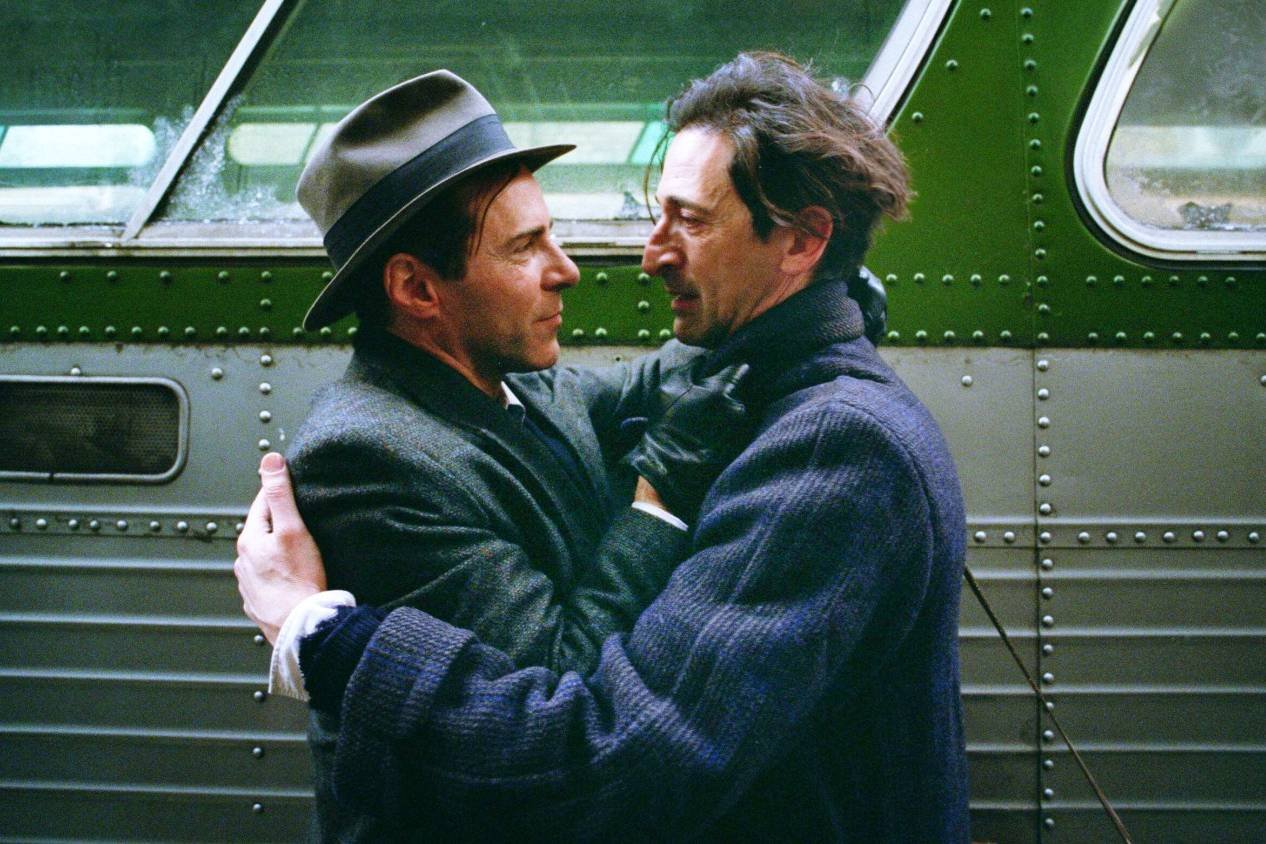
As The Brutalist builds on László’s relationship with the Van Buren family, it speaks a cautionary tale of immigration in post-war America. The United States was a global superpower by the end of World War II, and thus immigrants continued to flock into what many regarded as the land of opportunity. Unfortunately, as is the case with many stories like it, those idealist aspirations were quickly cast aside by American society’s realist nature–one dominated by capitalism and poverty. László initially feels welcome into this new world, but it eventually chips away at him. His affiliation with the Jewish religion, his role as an architect, and his identity as a Hungarian immigrant in the Soviet era make him a prime candidate for manipulation and antagonization. The film first makes the case for it with his cousin and his wife, an avid Catholic, before showcasing his treatment by Van Buren and American society as a whole. It causes László to become bitter and unfulfilled, so much as to make him admit to his wife that they aren’t welcome in America after years of desperately trying to feel they are.
What makes this perspective on immigration so subversive and unique is its approach to the material. The movie is not afraid to reveal America’s tendency to take advantage of the weak and impoverished or show a side of immigration often ignored or left behind by history. For every inspiring story about an immigrant’s rise to success or fame, there is one about failure and prejudice. It knows it to be true because it goes out of its way to tell its audience such from the eyes of László. There are multiple other underlying themes, but it focuses on immigration, the most underrepresented, first and foremost. It admits that audiences don’t need to know more about what they already do about society and its shortcomings. Instead, it welcomes a new frame of mind when discussing society and how it treats itself. In this way, The Brutalist uses the backdrop of post-war America in a way most stories never do, enhancing its novelty and notoriety because of how it approaches the material compared to its counterparts.
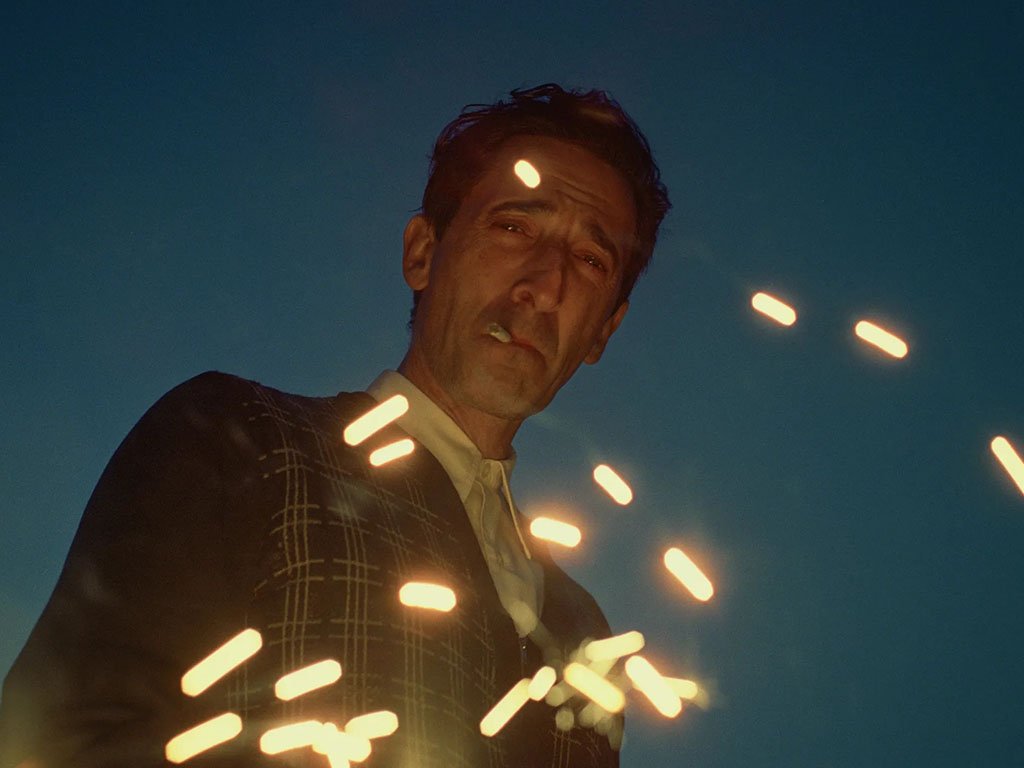
I give my due respect to The Brutalist because it chooses to be different. It chooses to be over three hours long. It chooses to include an intermission. It chooses to show American capitalism’s bigotry rather than try to scurry it away. It chooses to demonstrate the more tragic and twisted immigrant stories so they need not be lost amidst those the world magnifies. Much like the world we live in, our society comes with the good and the bad. The film’s willingness to showcase our reality is what makes it so noteworthy, not to mention how it combines architecture, religion, immigration, love, and capitalism under one umbrella and captivates audiences for how unabashedly raw in scope and emotion it gets. I would argue this tactic was emboldened by director and co-writer Brady Corbet’s intention to make the film a time capsule for modern audiences into what movies were once like–stories so deep and personal in scope that the industry and its most beloved filmmakers used to pump out almost regularly. Seeing his execution and interpretation of classic Hollywood techniques be performed and received so spectacularly well is a sign that the old ways work just as well, if not better, as the new.
Corbet has also done what no other filmmaker can. He has made me miss my architect of a father and I wish he had seen the embodiment of who he was and what he loved about architecture and storytelling. Only I could fully appreciate something like that, and it leaves The Brutalist very near and dear to my heart.
© Creative Insight 2024