The Xeno franchise has taken on many forms over the past few decades. What began as a pitch for a new Final Fantasy title became Xenogears, and later morphed into Xenosaga. Yet, none compares to Tetsuya Takahashi’s work in Xenoblade, establishing a grand sci-fi epic across four games in a mere twelve years. It’s a miracle this IP even exists in the form it does, considering it almost didn’t release in the West if not for a fan campaign, Operation Rainfall, making it a reality. Looking back, it was one of the best decisions Nintendo (of America) made. Takahashi and Monolith Soft are now regarded as staples of Nintendo hardware. Their most recent title, Xenoblade Chronicles 3, became one of the Switch’s best RPGs, pushing the system to its limit with its world and game design.
Yet, many often avoid the trilogy’s middle child, its anime influences and gameplay mechanics remembered with little gravitas. However, much of what makes Xenoblade Chronicles 2 as grand a tale as its counterparts lies in its jumbled imperfections — gameplay, story, characters, the lot. However, for the right people, it does what Xenoblade has always set out to do in crafting a beautiful world and cavalcade of characters.
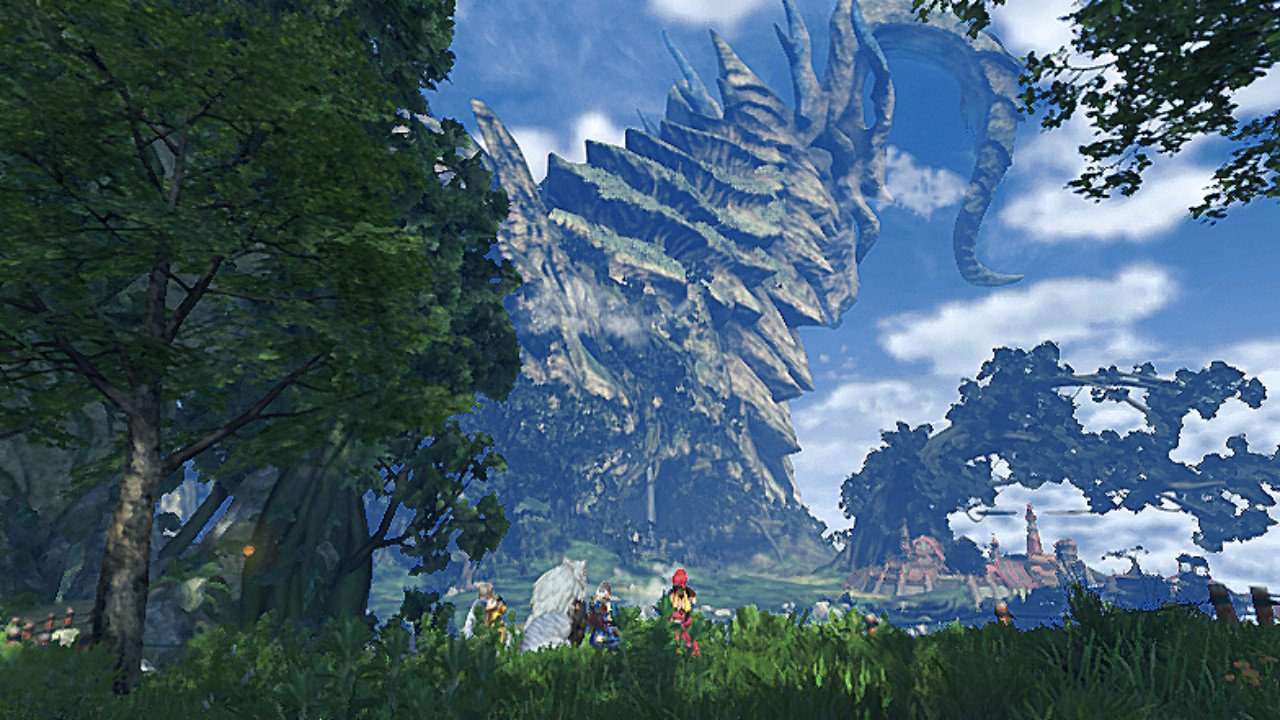
Being a game from the Switch’s first year on the market, Xenoblade 2 tries its best to keep up when it simply is not well-suited for the hardware. Texture pop-in is frequent to maintain a smooth enough experience without the game spontaneously combusting, with frame drops occurring only once too much happens on screen to be processed efficiently. Speaking of which, the combat system, while diverse and thorough in scope, forces players to devote time to mastering its variables. Those mechanics are pivotal in fights against bosses or high-level enemies, which makes it disappointing when much of the game’s tutorials are through text rather than in-combat training. This makes late-game barriers challenging to tackle, which requires boosting select characters’ “Field Skill” levels to reach their thresholds. Enemies are also notorious for having incredible amounts of health, which can become strenuous when they befell your heroes in two or three massive blows. The story’s tendency to rely on anime tropes can conflict with its otherwise thought-provoking themes. It even has a gacha-like system for awakening Blades before the mechanic was popularized. At its worst, the game will get on the player’s nerves, but it remains a unique and intentional experience.
After learning the game’s combat system, battles become an exciting, combo-infested barrage of attacks, using affinities between Drivers and Blades to deal massive damage. An enemy’s tendency to deal massive damage always leaves players on the edge of their seats, especially once they grapple with the game’s combat. The game’s anime tropes still make for moments of genuine hilarity that feel well-paired with the rest of the story’s darker tones. Its poor optimization comes only from what would otherwise be one of the most beautiful modern RPGs on a system comparable to an uncooked potato. The game has its flaws — many it doesn’t shy away from — but players will remember it not because of them, but despite them. Because underneath all its janky, frustrating setbacks is a memorable, emotional experience with a deep breadth of character dynamics and story arcs — one similar to its precursor and eventual predecessor in scale and adventure.
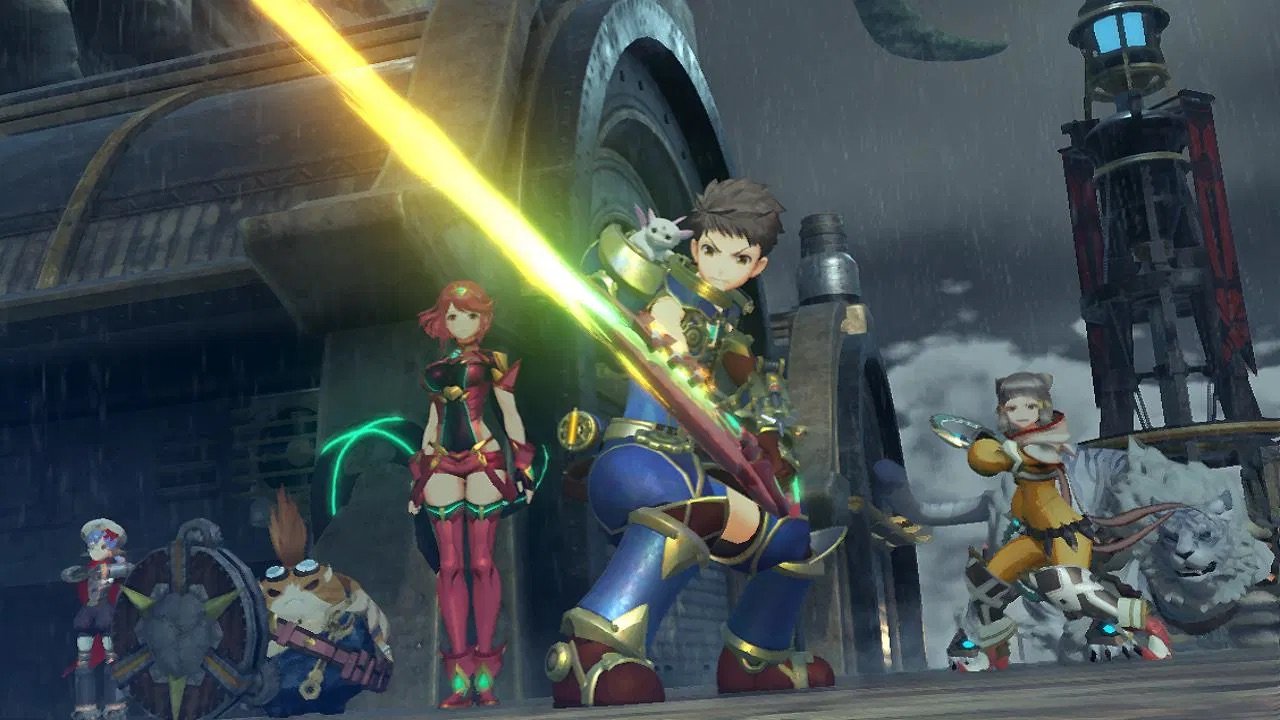
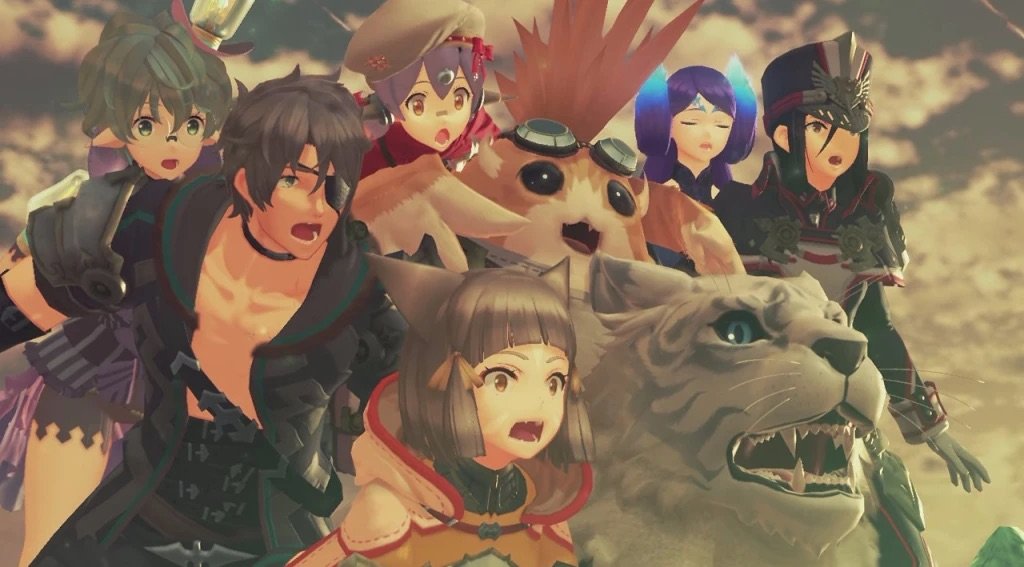
About two-thirds of the way through the main story, Rex hits rock bottom. The burden he has carried as the Aegis’s Driver crumbles at the first of many instances where he loses something precious to him. However, instead of letting him wallow in burden, his party reminds him of how far they have come because of Rex’s drive to help Pyra and Mythra. They know he sees the world with little knowledge of its stark realities, especially regarding Pyra/Mythra and their origins. Still, they show Rex what he has taught them up to that point: you should not have to carry a burden on your own. For the party, it’s a moment of catharsis, knowing the impact Rex has had on their journeys. In a game where burdens carried by Blades and Drivers alike turn them cynical, and in a world where the roles of each are put into question, Rex and his crew find the answer to their burdens and the world at large by simply being there for each other.
I often hark back to this moment, not because it visits Rex at his lowest, but because it embodies the immense heart and emotion behind each party member. Rex’s naivety and optimism would not be as prominent if not for Pyra’s kindness, Mythra’s bluntness, Nia’s spirit and sass, Zeke’s nonchalance and wit, Morag’s duty and diplomacy, Tora’s jubilance and charm, or Gramps and Dromarch’s fatherly compassion. They may wind up saving all of Alrest, but that would not happen without Rex, nor if he were not such an adamantly pure-hearted, kindred soul. His lack of hardship as a twelve-year-old gives characters hope in a world doomed for oblivion by those who made it. This pays dividends as the story concludes, with Nia and Zeke offering two of the game’s strongest arcs that perfectly capture how Rex has changed their lives for the better, and provide some of the game's most heartfelt and hilarious moments.
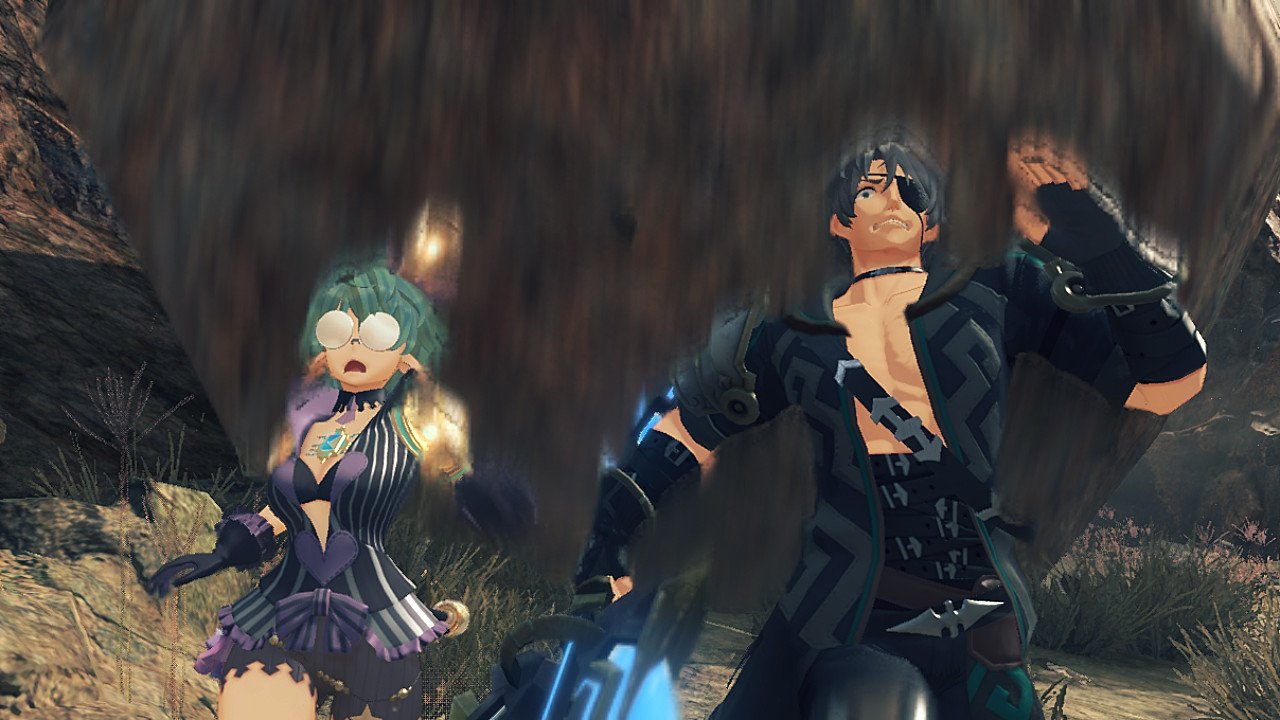
Likewise, Zeke and his Blade, Pandoria, are by far the game’s best duo in terms of emotional range, capable of providing comedic remarks one moment and heartfelt motivation the next. Especially in the story’s latter half, it provides relief from an otherwise tense atmosphere, discussing camaraderie as much as it does guilt and shame. As a result, Xenoblade 2 is often less about what directly happens in combat or to the characters and world, and more about how it all feels — the connective tissue between the game itself and the player behind the controller. It’s rare to see a narrative be so willing to play to its strengths and weaknesses, but even rarer when its willingness to play with them pays off in even the smallest of its details.
Xenoblade Chronicles 2 thrives most when it remains unafraid to be what it is. Despite its grimy performance, occasional reliance on tropes and forced tension, and a combat system requiring patience and dedication to master, the game’s narrative, character, and world design remain its absolute strongest points. It’s clear how much heart and care the developers share for Xenoblade and the fans who gave it global recognition — sometimes to this game’s detriment. Yet, those are the very qualities that many love about Xenoblade Chronicles, with its successor staying true to form and never falling short of an experience that makes players feel something about it and the world around them. It feels revelatory to have a story that takes the series in a slightly different direction with its character dynamics and class struggles, and be so upfront about what they face when the world is on the brink of annihilation. The game’s pitfalls may overshadow its greatest strengths in online discourse, but it remains a remarkable journey that continues the legacy of a once-unremarkable series.
Photo credits: Nintendo, Monolithsoft
© Creative Insight 2024